POSTED BY BlueSky PR

Three social media hacks to increase the visibility of your posts

Three social media hacks to increase the visibility of your posts

Social media has undergone a huge transformation in recent years – not just in growing its role in mainstream society and politics, but also in the world of recruitment, where the likes of LinkedIn and even X, Instagram and TikTok no longer represent shiny add-ons, but critical parts of hiring strategies. These platforms are live channels where candidates form impressions, where passive talent is poached and where clients judge the agency’s market knowledge. The problem is, keeping pace with their development and changing adoption and usage patterns is a challenging business, not least for agencies with multiple other priorities to tackle. That’s why we have outlined three key social media hacks for recruiters to increase the visibility of their posts, and ensure they are capitalising on the potential offered by social media to engage with clients and candidates

Disability in Recruitment – what’s the next step?

We recently attended a roundtable hosted by The Recruitment Industry Disability Initiative (RIDI), which aims solely to break down the barriers facing disabled people in the workforce. On the day, attendees came together to discuss the hurdles disabled individuals face and how the recruitment industry must work together to truly make a difference. The main theme centred on how we can enable technology for disabled talent and the impact it is currently having. Attendees discussed the types of technologies available which are designed to help those with impairments and disabilities. Challenges voiced ranged from ways to alter the application process, how to change attitudes and the importance of reasonable adjustments. Currently 75% of disabled people believe their condition is a barrier to employment, while the Business Disability Forum has found that 71% of disabled people will click away from websites they struggle to use or access content on. With this in mind, it is crucial that recruitment firms take a fresh look at how accessible application processes are to disabled candidates if they are to tap into this valuable pool of talent.
BBC’s The Bodyguard: the power of reactive PR

BBC’s The Bodyguard: the power of reactive PR

While expertly executed PR programmes, based on carefully constructed plans, are the bedrock of any successful PR campaign, reactive PR and marketing activity can offer brands a fast-track route to getting their voices heard. And this technique was something that Counter Terrorism Policing UK demonstrated perfectly, when it capitalised on the popularity of BBC’s The Bodyguard: the most watched new British drama in more than a decade, with more than 10 million viewers tuning in to the first episode. Demonstrable ROI By creating a social campaign tagged to the hit show - which offered behind the scenes insight and directed viewers to learn more about working in the sector - the comms team successfully tapped into a ready-made audience to gain demonstrable ROI.

The Nike scandal – what can PR professionals learn?

You may have heard about the bold move from global sports company Nike, selecting Colin Kaepernick, (ex-NFL player and US civil rights activist) as the new face of its global advertising campaign.
The power of polls

The power of polls

Positioning your brand as a thought leader in its field through PR takes not only a superior understanding of the market, but also time and dedication. However, while there is no shortcut to building a solid media profile, generating data through surveying your networks can supercharge a press release by boosting both newsworthiness and the potential to repurpose. Flick through any national newspaper, or scroll through any major newsfeed, and you’ll find that a significant number use statistics as a hook. Thanks to the power of polls, we know that Magnums are the UK’s favourite ice cream, England’s progress in the World Cup increased national pride and two thirds of voters are baffled by Theresa May’s Brexit policy. None of these stories are particularly surprising – but you can guarantee they wouldn’t have made headlines without the figures to back them up.

Women in Recruitment - what’s the next step?

As partners of The Recruitment Network (TRN) we recently attended the Women in Recruitment roundtable where industry representatives came together to discuss the biggest hurdles facing females in recruitment today. The main themes focused on why increasingly talented women are leaving roles early in their careers before they reach senior positions and the reasons behind this. Challenges voiced around the table ranged from the gender pay gap in recruitment, potential discrimination such as age, and the lack of role models in the industry. In particular, we looked at whether the culture of recruitment means that women either leave the industry altogether or don’t view it as a career of choice. With this in mind, here are some top strategies to get the ball rolling to encourage and empower more females in recruitment today: It starts with surveys Getting back to the root cause is key. For organisations to master retention and engagement, surveys of all female employees are a great way to identify the top factors that make them want to stay with the company and let’s employers know what to delve deeper into. Focusing on bite sized chunks and information gathering is the first step towards progress.
3 reasons why your recruitment agency should outsource social media

3 reasons why your recruitment agency should outsource social media

“Should we be outsourcing our social media?” That is a topic many recruitment agencies are currently having internal discussions on around the country.

Do shock tactics in PR really work?

We know all too well; the same generic type of careers pages can sometimes fail to engage and attract the best individuals which can result in top-talent going amiss. For many businesses and marketing teams there is the challenge of being tasked to regularly provide informative, creative and attention-grabbing PR campaigns. And while this will often be tailored to certain objectives or showcasing new products which can affect how the campaign is executed – there are still key strategies to bear in mind. Recently we have seen things going awry with big brands under fire for their somewhat suggestive adverts. For example, Heineken being called out for its low-calorie beer advert labelled as “terribly racist” and the question is…could we be seeing a new trend of businesses deliberately choosing to cause uproar and conflict in order to raise their profile in the media and create a stir around their PR campaigns?
How to write a winning award submission

How to write a winning award submission

Entering corporate awards can be a great way to gain exposure, enhance brand perception and validate your market position. However, for each category, there can be only one winner – here’s how you can stand out from the crowd and earn your status as an ‘award winning’ organisation. Choose wisely To be in with a chance of taking home a trophy, you’ll have to invest a hefty chunk of time and resources into collating the information needed. For this reason, taking the decision to enter awards shouldn’t be taken lightly – it has to be worth the effort. Do some research to determine which awards have kudos in your industry and are recognised by your customers – whether that be The Sunday Times’ ‘100 Best Companies to Work For’ or the Concrete Society's Awards for Excellence. For example, we’ve recently been shortlisted for the Recruitment International Supplier Awards in the category of Best Marketing & PR – a hyper-niche category from a brand that our clients are familiar with and trust.
The magic of ‘piggybacking’

The magic of ‘piggybacking’

Jumping on the latest news can be one of the most effective ways to generate content for your recruitment agency. Not only does it show that you are ‘on the ball’ and efficient but also dedicated to the client and their reputation. But in a digital 24/7 world, you have to act fast amongst the rest. Recognising the appetite for pressing subjects and topical events such as International Women’s Day and National Apprenticeship Week are great ways to keep you one step ahead and achieve prime time coverage. So here are some top tips to maintain a rapid smart-proof response to the hot topics and build your brand further with your target audience. 1. Plan your approach While this may seem obvious, monitoring the daily news agenda, spotting opportunities online and staying on top of current events is key to ensuring nothing gets missed. Being aware of important dates and times is also essential to be ready in advance for a related story that might get released last minute. Calendar events such as International Women’s Day are highly celebrated throughout the media and covering the story fast before anyone else is the beauty of preparation, at a time when the press you’re targeting might be looking for comment or writing on the story themselves.

KFC: What can PR professionals learn from the Colonel?

As far as PR challenges go, a chicken shop running out of chicken is a pretty major deal. Which perhaps explains the furore which ensued when KFC was forced to close the majority of its 900 restaurants after bringing a new delivery partner on board. The fiasco was covered extensively across the UK mainstream media, with the most influential outlets from the Sun to the Financial Times offering real-time updates on the situation. Social media, meanwhile, went into overdrive, with fans of the chain demanding, among other things, that the government calls an emergency Cobra meeting over the shortage. Unsurprisingly, rival brands were only too quick to ride the wave of publicity. Burger King offered free food for a year to a customer who told ITV News she was forced to visit the burger joint after finding her favourite chicken shop closed, while Iceland took to giving away frozen chicken strips.
How will Facebook’s news feed changes affect your recruitment agency?

How will Facebook’s news feed changes affect your recruitment agency?

In the early hours of Friday 12th January, Mark Zuckerberg announced changes to Facebook’s news feed algorithm that will have huge ramifications for every single company that uses the platform. “Recently we've gotten feedback from our community that public content -- posts from businesses, brands and media -- is crowding out the personal moments that lead us to connect more with each other,” Facebook’s co-founder wrote. To combat this, Facebook will be showing less content from businesses, brands and media whilst prioritising ‘meaningful interactions between people’ – in essence returning the platform to its original goal. So, what do these changes mean for marketers at recruitment firms? What we know about the news feed changes so far:

Blurred lines: Differentiating recruitment marketing and PR

In a world where the lines between advertising, marketing and PR are becoming increasingly blurred, it’s little wonder that some business leaders struggle to see where one function ends and another begins. Add in the role played by social media and it’s easy to see why there’s so much confusion.
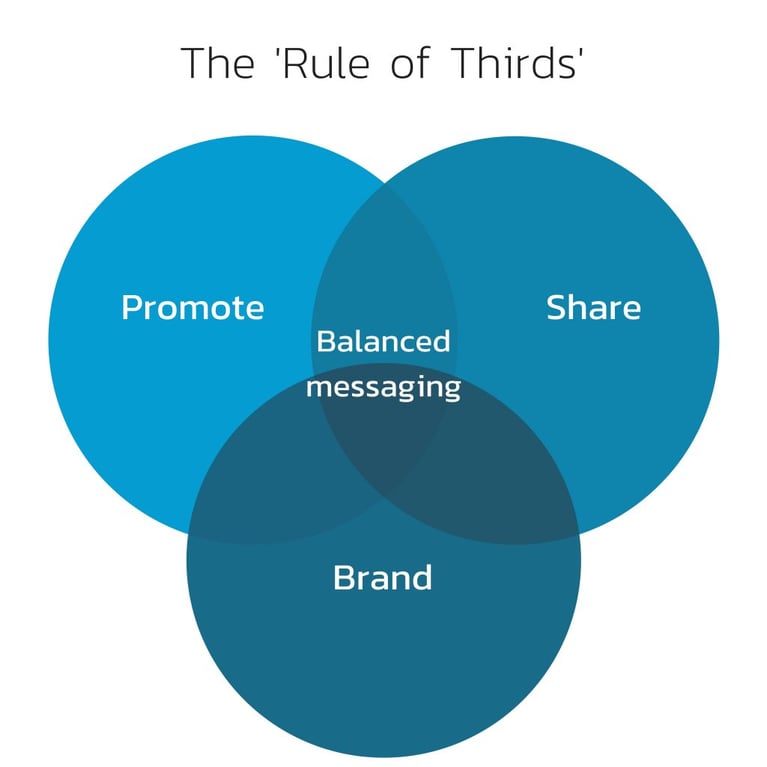
Why you should be using the ‘rule of thirds’ in your social media strategy

Why you should be using the ‘rule of thirds’ in your social media strategy

One of the most common dilemmas facing recruitment marketers when it comes to producing a social media strategy is deciding on the content mix. What should you be posting? How many job posts is too much? Should you be sharing articles from third-parties? In steps the social media ‘Rule of Thirds’ model and how it can benefit your recruitment firm...
Essential steps when a reporter says 'yes'

Essential steps when a reporter says 'yes'

You’ve identified the ingredients for a perfect story, fired off a killer email pitch or picked up the phone and articulated your client’s experience, expertise and angle. The editor or journalist wants to cover the story Result! But where do you go from here? What are the essential steps when a reporter says 'yes'? Be clear on what the publication needs from you It may sound obvious, but be sure that your expectations are aligned. You may have thought that you were setting up an interview, while the commissioning editor had a 1,500 word, Harvard referenced, by-lined article in mind. Make sure you’re both on the same page.
3 reasons why your CEO should be using social media

3 reasons why your CEO should be using social media

Whilst getting social media buy-in for your brand can be a challenging experience, one thing that is often much more difficult is persuading your CEO to create their own social media accounts. Common objections often include being too busy to post on social media, not being digitally savvy enough or not having anything interesting to say. And this attitude is reflected in research from America which has revealed that 60% of Fortune 500 CEOs have no public social media presence. So how can you get them on-board?
How to be an effective media spokesperson

How to be an effective media spokesperson

We’ve all been there. You turn on the TV or open the morning paper only to see a story which is centred around your business sector splashed everywhere. You knew this story was going to hit the headlines months ago – why aren’t you being interviewed along with the other experts? Here are our top tips for becoming an effective media spokesperson: Be visible Becoming a thought leader takes commitment. If a reporter or researcher is looking for insight on GP shortages in rural Essex, for example, the obvious place to begin their search is online. Make a habit of sharing snippets of your expertise and opinions on the news across social media, your own blog and third-party platforms to increase your visibility. We’ve had clients appear on Sky News after TV researchers stumbled across opinionated blog posts. Lay the foundations and the opportunities may just come to you. Be a specialist

How to encourage your employees to share content

On average, employees have 10 times more followers than their company's social media accounts. We recently shared our 10 top tips for social media success. In the post we stressed that encouraging employees to post and share content about your organisation will increase your reach beyond your own channels, while simultaneously building potential leads and brand perception.

In it for the long-haul: why short-term marketing doesn’t work

Building a brand takes dedication. As well as a great product or service, you need to invest time and resources into spreading your message. There is no quick fix - success relies on a sustained approach. Short-term marketing initiatives are quite frankly, pointless. Of course, there is a place for dedicated campaigns to promote a time sensitive event or initiative, but this should be contextualised within a programme of ongoing communications. You wouldn’t expect to get fit by visiting the gym once – however hard you pushed yourself during your single visit – so why should the results of PR and communications be any different?
Seven top tips to sharpen your PR writing

Seven top tips to sharpen your PR writing

I recently blogged on why PR professionals are unlikely to be replaced by robots in the near future. One of the reasons why is the human ability to craft copy to create impact at a time when content can no longer demand attention. Here are my seven top tips to sharpen your PR writing: Get to the point quickly Whether you’re drafting a pitch, press release or article, ensure that your intended message is clear from the outset, or you’ll swiftly lose your audience. Cover all bases PR professionals should always attempt to answer the ‘who’, ‘what’, ‘where’, ‘when’ and ‘why’ in the first sentence or paragraph of every piece they draft in the interest of brevity.

PR or Advertising?

It’s the age-old struggle. In the left corner we have advertising, represented by Mad Men, while in the right we have PR, represented by Absolutely Fabulous. Obviously, in my eyes there’s one clear winner, however it’s probably fair to say that I’m ever so slightly biased. But what is more powerful, PR or advertising? Dated concept It would be unfair to say that advertising doesn’t have its place in the modern world, however to most commentators it’s seen as less effective than it once was in the past. If we rewound to even as recently as 20 years ago, advertising was still a powerful platform and was used to drive the consumer behaviour that organisations wanted. However, back then it was easier to convince buyers to do what you want and it would be fair to say that people were less savvy and, quite possibly, less cynical. Now in the modern, hardened, social media-led world it’s easy to see through often transparent campaigns, which can have damaging effects on firms.
10 tips for social media success

10 tips for social media success

1. Find out where your audience is It can be extremely tempting to create a social media account for your organisation on each of the major platforms. However, doing this means you could be wasting valuable time and resources which would be better spent on the channels that your target audiences are active on. Take time to research this, and decide if creating or maintaining a presence will be beneficial to your overall business objectives.
How to measure the success of a PR campaign

How to measure the success of a PR campaign

One of the major gripes that many people have with PR is that it has historically been seen as overly fluffy and often challenging to prove a direct return on investment. For the financial professionals amongst you, that’s probably the number one thing you look for when investing in a service and admittedly, it has been one of the industry’s biggest weaknesses. Historically, the field has been more about creating positive sentiment and raising brand awareness rather than proving direct and measureable financial return from your PR investment. So, how do you measure the success of PR?
Why PR professionals won’t be replaced with robots

Why PR professionals won’t be replaced with robots

The dialogue around robots coming for our jobs has been around for some time now. And as technology continues to advance, many professions have realised that this is the scary truth. However, despite the Office for National Statistics (ONS) reporting that 1.5 million people in England are at high risk of losing their jobs to automation - I’m confident to say that PR professionals won’t be replaced by robots.
Using PR to win the war for recruitment talent

Using PR to win the war for recruitment talent

Unless your organisation is an Instagram or a Snapchat and you’ve developed some as yet unidentified method of apparently creating huge amounts of revenue, it’s pretty clear that people are the key to any business. Your employees and what they know are generally what differentiates you from the competition and as much as you might think your fancy CRM, or the PlayStation you have in the kitchen make your company what it is, it’s actually your employees. This makes winning the war for talent – your own talent – absolutely critical and, as we all know, the race is fast and intense in the recruitment industry. Every firm is battling for the best and brightest in the market with the vast majority using little else but salary and bonus options to attract their next critically important employee. That’s clearly not enough and at a time when many of your rivals are likely promising the world and everything in it to their potential employees, you need to go that extra mile to recruit the talent you want. However, fear not, we’re here to help – PR can make all the difference when it comes to recruiting for your own firm. How?
What to write in a press release? Write what you know NOT what you do

What to write in a press release? Write what you know NOT what you do

Why write about what you know when you want people to know what you do? A good PR company can help raise your business’ profile so you get seen by your target stakeholders. We can do this in a number of ways, such as securing thought leadership articles in sector press, enhancing your company’s blog to attract new audiences and writing press releases which will be distributed to all the key journalists in your industry on behalf of your business. However, too often, companies approach PR thinking their agency will write press releases explicitly about what their organisation does and who they are, but the fact of the matter is journalists don’t care about these things. While this may sound harsh, it is the truth. What they do care about though is what you know and, in particular, the things you know that they don’t. So, here’s what you should be writing about in a press release.
14 email marketing tips for recruiters

14 email marketing tips for recruiters

When used correctly email marketing can be an extremely effective channel for recruiters to engage with potential candidates and clients. In this blog post, I share some top tips to increase your email marketing effectiveness and optimise performance.
Beware of fake awards

Beware of fake awards

Awards - it's great to be a winner! But... because we all love to win, scam artists have cottoned on and now bombard you with opportunities to show the world that you are the number one ...as decided by... hmmm... who exactly? Recruiters, beware of fake awards.
Why share your opinion on the news?

Why share your opinion on the news?

Few people hold back from airing their opinions on current affairs in person. And let’s face it, 2016 and 2017 have been particularly easy years for making small talk. However, while I’m sure you will have shared your firm thoughts on Brexit, Trump or The Great British Bake Off to anyone within earshot, for the majority, this insight will never be broadcast more widely. However, publicly sharing your viewpoints on relevant news stories online can be a fast-track to building your personal brand and, by association, your company’s corporate identity. You can’t become a thought leader without saying what you think While the majority of business leaders now realise the value of social engagement, the content that many organisations produce is formulaic, dry and uninspiring. Perhaps they are just playing it safe, or lack the confidence to open up about their thoughts and feelings, but while liking and sharing the posts of others is a step in the right direction, there really is no substitute for real thought leadership. Don’t just share a story that is of interest to your networks – if it’s really relevant, the chances are they will already have consumed it from the source. Instead, use your own blog, or a third-party platform, to put some meat on the bones. Speak directly to your audience and use your expertise to outline what it means for them specifically. What if my opinion is controversial?

The impact of social media on your employer brand

The impact of social media on your employer brand

As recently as a decade ago if you wanted to find out what it was like to work at an organisation you’d have to track down someone who worked there, or hope that the firm had a particularly proactive marketing manager who uploaded information about the employer brand on to the company website. However, times have changed. Now, company information is everywhere and if platforms like LinkedIn, Facebook and Twitter aren’t enough, then firms also have to contend with portals like Glassdoor, which can give the full ‘warts and all’ story whether the company wanted it or not. Simply paying someone a good salary and expecting them to be happy doesn’t cut it anymore. People want a ‘nice’ employer, particularly at the ‘millennial’ end of the market. In fact, 69% of respondents to a Glassdoor survey revealed that they wouldn’t take a job with a company that had a bad reputation and an impressive 84% would consider leaving their current jobs if offered another role with an organisation that had an excellent corporate reputation.

Step away from the email!

In an ever connected world it is all too easy to send a press release to a journalist or email them with an idea for an article. Indeed, I know from the many journalists I’ve built a rapport with that it is a common occurrence for internal marketing, communications and PR teams to fire across multiple emails in the hope of a quick hit. But I implore you, please think before you email that journalist! There are so many considerations you have to ask yourself; is this the right journalist? Is this the right story for the publication? Is this the best way to contact them? Is this the best day to contact them? And so on. But none of this can really be discovered without speaking to the individual – a frustrating catch 22 situation for anyone. And that’s where a good PR firm can add real value. The stereotype of a journalist as an extremely busy individual with short deadlines to meet, an overflowing inbox and an endless stream of nuisance calls is, I’m afraid to say, true. But a good PR agency has not only built a relationship with the right journalists, but also knows when to call. And as my experience at BlueSky PR has taught me, investing the time to build the relationship with these key individuals means that not only do they take our calls with proverbial open arms, but they also call us seeking expert comment and even article ideas.
5 top tips for identifying social media platforms for your recruitment business

5 top tips for identifying social media platforms for your recruitment business

Social media is an essential tool for recruitment marketers looking to keep their brands front of mind and generate new followers and leads. However, getting started on social media can be difficult especially if you are a new business and are deciding which platforms you should establish a presence on.
How to use Pinterest to add value to your company

How to use Pinterest to add value to your company

In April we offered tips on writing a press release and, this time, we’re going to look at how Pinterest can add value to your company. Pinterest, which launched in 2012, is now the third most popular social network after Facebook and Twitter, so it’s perhaps not something you should ignore. It doesn’t work in the same way as most other networking platforms as there is no direct communication. However, it is becoming increasingly popular with businesses as a new platform for engagement. So how does it work? Pinterest is an online pinboard where you can ‘pin’ (post) images and videos. These can be uploaded from your computer, you can find them online, or you can re-pin images from other pinboards. When you pin from a website, Pinterest automatically credits the original creator by grabbing the source link, so you don’t need to worry about copyright issues. As well as having an image or video, you can give a description of the pin using up to 500 characters. You can also add a ‘Pin It’ button to your website so that users can take images and put them into Pinterest. When you’re confident with using the platform, you can find out your Pinterest influence to see how many followers you’ve got, how many people have ‘Liked’ your page, and how many repins there have been. You can do this by using apps such as Pinpuff or Pinerly, and it’s a useful tool for measuring ROI. So how could you use it for recruitment?
Recruiter Q&A: a&dc

Recruiter Q&A: a&dc

Why do you use PR? At a&dc we are seen as leaders in the field of behavioural assessment and development, and our clients look to us for the latest thinking and research. In order to really portray ourselves as thought leaders, we feel that PR is absolutely critical. We have been working with BlueSky since September last year, and have come to rely on PR. We are now able to seek out opportunities within industry and national press, both in digital and in print, reaching a much wider audience. Social media is also important for us, and we now have a twitter following of over 500. BlueSky manages our twitter account for us, and it’s a great way of letting people know of any events we have coming up or blogs we’ve written. How do you measure ROI? We measure ROI in different ways. For example, by looking at inbound leads brought in through social media channels and articles, the number of social media followers we have and their interactions, and how many new article opportunities we have each month. Also, we look at SEO reporting on our brand terms because we recognise that digital PR has an impact in this area too.
Why recruitment firms should survey their clients and candidates

Why recruitment firms should survey their clients and candidates

Just like businesses in other sectors, recruitment firms should survey their clients to gauge sentiment and identify anything that needs to be addressed – whether that’s a potential new opportunity or a possible threat. When you buy something online from eBay or Amazon, use an online help desk or even when you get your car serviced, you will, more likely than not, be sent a questionnaire asking you to rate your experience.
Case Study: Twenty Recruitment

Case Study: Twenty Recruitment

Media Relations in Action The company Twenty Recruitment was formed in January 2009, in the depths of the recession, by Paul Marsden and Adrian Kinnersley who were responsible for the rapid growth and sale of Astbury Marsden. The company specialises in mid to senior level appointments within the professional services, financial services and commerce & industry sectors across technology, finance and IT. The challenge
Recruiter Q&A

Recruiter Q&A

For some recruitment businesses, the decision to undertake PR can be a hard one. Recruitment is hugely results driven and ROI is easily measurable. PR is different, and it can take some time to see results. With this in mind, we thought we’d feature a Q&A in each newsletter with a recruiter who uses PR, and why they do so. This edition we speak to David Press, Director at DMJ Recruitment. Why do we use PR? We use PR for a variety of reasons but a key motive is that it places us as experts in the market place and gives us a ‘voice’ within a crowded and competitive industry. As a prominent presence in the market place, gaining coverage in broadsheets and targeted press allows us to enhance our brand but also stay at the forefront of our existing and potential clients’ minds, especially during difficult economic times. PR is also a very useful marketing tool when trying to win new business, allowing us to demonstrate our successes and experience. One of the most important parts of our PR activity is our social media strategy. We use Twitter, Linkedin, our blog and our website to demonstrate our wider interest and knowledge in our respective markets and to engage with our candidates and clients.
Recruiter Q&As

Recruiter Q&As

For some recruitment businesses, the decision to undertake PR can be a hard one. Recruitment is hugely results driven and ROI is easily measurable. PR is different, and it can take some time to see results. With this in mind, we thought we’d feature a Q&As with recruiters who use PR, and why they do so.
Recruiter Q&A

Recruiter Q&A

For some recruitment businesses, the decision to undertake PR can be a hard one. Recruitment is hugely result driven and ROI is easily measurable. PR is different, and can take some time to see results. With this in mind, we thought we’d feature a Q&A with a recruiter who uses PR, and why they do so. This edition we speak to Adrian Kinnersley, MD of multi sector professional recruiter Twenty Recruitment Group

Good PR starts with great customer service

Call me old fashioned, but I’m a firm believer in genuinely good service resulting in word of mouth as the first principle of PR,

Would you hire Charlie Brooker?

Reading through Andy Headworth's mostly fabulous 2010 PDF, '50 Top Tips for Jobseekers' this lunch time, I came across one tip in particular that, I'll admit, made my stomach lurch.

The Daily Mail – pretty rubbish prose or PR pros?

There’s no such thing as bad publicity… right? The Daily Mail doesn’t seem to think so. In fact, it seems that every other day