The most trusted voice in your business isn't your business
Why would you want to be a recruitment thought leader?

Like what you read? Make us a preferred source on Google.
If you're producing content and it's not landing, the problem might not be the content itself. It might be that you don't know who you're writing for.
I see this a lot with recruitment firms. The marketing team is putting out blogs, social posts, emails, and none of it is getting the response they expected. When I ask who their ideal candidate is, the answer is usually something vague. "Finance professionals." "People in tech." That's not enough to build a content strategy around.
Candidate personas fix this. They give you a detailed picture of who you're actually trying to reach: what they care about, where they spend time online, what would make them consider a move, and what would make them pick your firm over the next one. Once you have that, everything else gets easier. Your content gets sharper, your targeting gets more precise, and you stop wasting budget talking to people who were never going to convert.
What is a candidate persona?
A candidate persona is a semi-fictional profile of your ideal applicant for a specific role or sector. You build it by defining the characteristics, skills, motivations and behaviours of the candidates you most want to attract.
A good persona helps you work out which candidates are the right fit, which channels to find them on, what content will actually resonate with them, and how to get your marketing and recruitment teams pulling in the same direction. It also feeds directly into your wider recruitment marketing strategy, because you're making decisions based on evidence rather than assumptions.
Personas are only as good as the information behind them. I'd recommend pulling from at least three or four of these sources to get a rounded picture.
This is the easiest one to set up and the one most firms neglect. Work with your consultants to make sure they're asking the right questions during the recruitment process and recording the answers in your CRM. What motivated the candidate to look? What mattered most in their decision? Where did they first hear about the opportunity?
It doesn't need to be complicated. A few extra fields in your CRM, filled in consistently, and you'll have useful data building up within weeks.
If your candidates are active on LinkedIn, their profiles tell you more than just their job history. Look at the content they engage with, the groups they've joined, the people they follow. That tells you what they're interested in and how they consume information, which is exactly what you need to know when you're planning content.
This is the source I find most valuable, and it's one your consultants are sitting on already. Their follow-up conversations with placed candidates are full of insight. What are their career goals? What do they value in an employer? What nearly put them off during the process?
Build these questions into your post-placement check-ins. It doesn't add much time to the conversation, and over a few months you'll have a steady flow of real, specific insight that no amount of desk research can match.
Segment your database and send short, focused surveys to specific groups. You might ask candidates in a particular sector what frustrates them most about looking for a new role, or what would make them more likely to engage with a recruiter.
Keep them short. Five minutes max, one topic. A twenty-minute questionnaire trying to cover everything will get abandoned halfway through, if not before. A small incentive helps too, even just a coffee shop gift card draw.
This is where the process has changed over the past couple of years. You can use AI tools to help make sense of data you've already collected, pulling patterns out of CRM notes, survey responses and consultant feedback that would take hours to spot manually.
AI is also useful for broader market research: what skills are in demand, what salary expectations look like in specific sectors, what candidates are discussing online. This is really useful to generate a rough first draft of a persona, which you can then sit down with the consultants to check and refine.
It won't replace talking to actual candidates. But it speeds up the research stage considerably, and it's good at surfacing connections you miss when you're too close to the data.
The mistake I see most often is stopping at demographics. Age, location, education, career stage, salary expectations. Those give you the outline, but they don't tell you anything about what makes this person tick.
You need psychographics too. What motivates them? What do they value in an employer? What are their career goals? What would make them leave their current role? What frustrates them about the job search? This is where the real insight sits.
Then there's what I call the "where and how" questions. Which platforms do they use? What content do they engage with? How do they search for jobs? Are they actively looking or passively open? Which professional communities do they belong to? This tells you where to find them and how to reach them.
You won't answer every question for every persona. But the more you know, the better your marketing decisions.
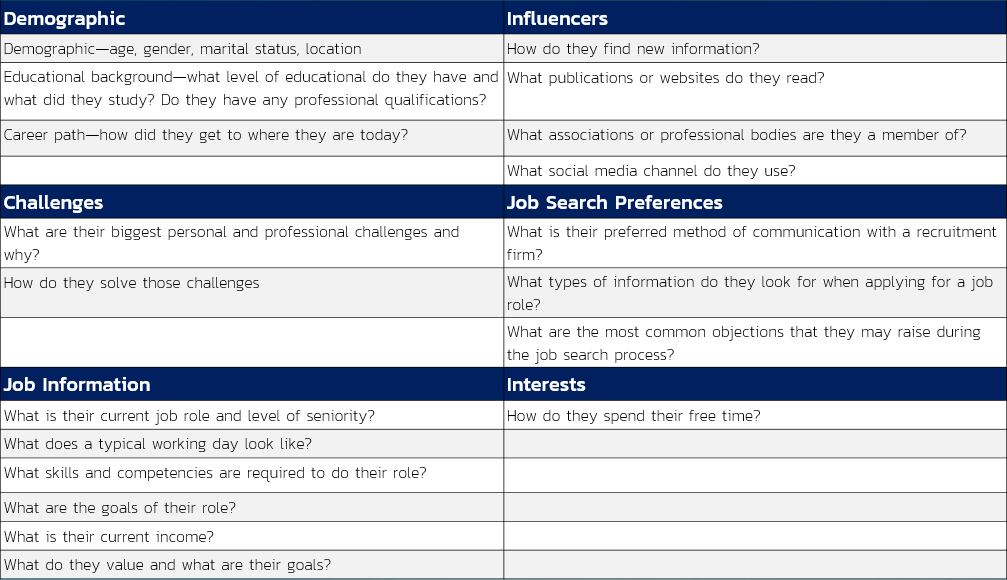
Once you've got your data, sit down and look for the patterns. Common motivations, shared frustrations, similar career paths, recurring decision-making factors.
I'd strongly recommend doing this with your consultants, not just your marketing team. They'll spot things you won't, and they can confirm whether the patterns in the data match what they're hearing in real conversations.
Once you've nailed down the key characteristics, give each persona a name and a short description. I know this sounds like a small thing, but it makes a real difference. "What would Sarah want to read?" is a much more useful question when you're planning content than "what would a mid-career finance professional with five years' experience want to read?" It keeps the person real in your team's mind.
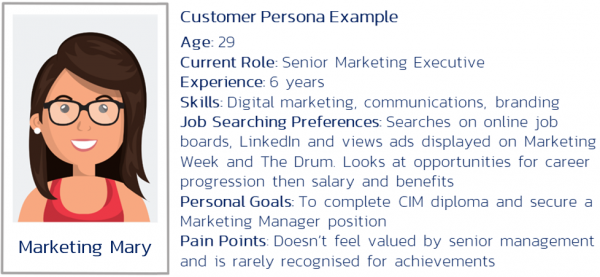
Personas aren't something you do once and file away. Candidate expectations shift, markets change, the skills your clients need evolve. I'd review them at least once a year, using fresh data from your CRM, your consultants, and whatever research you've done recently.
Are you looking for support with your recruitment firm’s marketing? Get in touch today to find out how the BlueSky PR team can help.
Download our latest recruitment marketing report
Why would you want to be a recruitment thought leader?
Freddie is deciding which recruiters to talk to. Daphne’s hiring and wants three suppliers to shortlist. Not long ago ...
Who wrote the last piece of content you read? Was it a person? Did you skim through it? Or really focus? There's a ...
Your next client didn't scroll through the first page of Google to find you. They asked ChatGPT, Copilot or Perplexity ...
Post Your Comment